Yachting is a luxury experience that combines elegance, adventure, and relaxation, but knowing how to dress appropriately can make or break your time on the water. Whether you’re heading to a casual daytime cruise or attending a glamorous evening yacht party, the right outfit ensures you’re comfortable, stylish, and prepared for any situation. At Palmara Charters, we want you to feel as good as you look from the moment you step onto our pristine decks.
In this guide, we’ll take you through everything you need to know about yacht attire, from the essentials of comfort and style to the seasonal variations, to help you feel confident on board. You’ll also get practical advice on what to wear for different yacht occasions, along with tips on how to choose breathable fabrics, accessorize, and make the most of your yachting experience. If you’re planning your next yachting adventure in Mexico or beyond, this guide will ensure you’re dressed for the occasion.
The Yacht Dress Code: What to Know Before You Set Sail
Yachting attire is unique because it merges both luxury and practicality. Unlike more formal settings, the dress code on a yacht strikes a balance between casual elegance and comfort. The goal is to look polished, but also to ensure ease of movement while enjoying activities on deck or relaxing by the water.
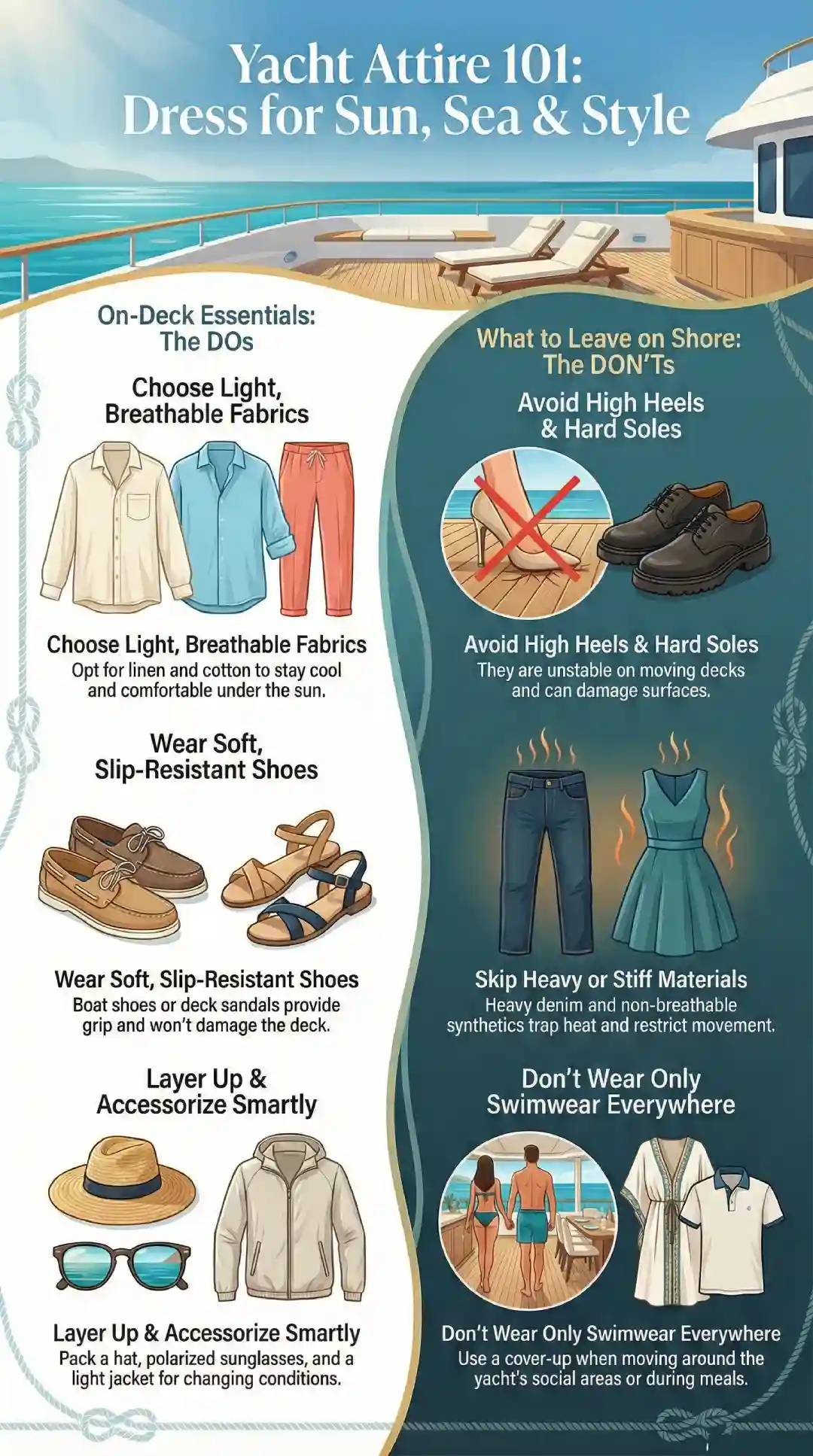
For most yacht trips, you’ll want to focus on light, breathable fabrics that keep you comfortable in warmer weather, while maintaining a sophisticated look. For instance, linen shirts, cotton sundresses, and elegant swimsuits are all great options that are both functional and stylish. It’s important to also consider the practical needs of your outfit, such as ensuring that your shoes are non-slip, especially when walking on the deck.
What is Yacht Casual Attire?
“Yacht casual” is an essential term to understand when dressing for a yacht. It refers to a relaxed yet polished look that is appropriate for most yacht settings. Yacht casual attire can be stylish without being too formal, making it perfect for a day cruise or a laid-back evening on the water.
- Women’s Yacht Casual Attire: Lightweight maxi dresses, loose-fitting blouses, and elegant sandals are perfect. You want to look stylish but avoid anything too tight or restricting.
- Men’s Yacht Casual Attire: A classic polo shirt paired with chinos or linen pants is ideal. It’s important to keep the look neat and put together but still practical for the yacht environment.
Yacht casual attire is not about overdressing; it’s about creating a balance between looking good and being comfortable while on the water.
Yacht Party Dress Code
If you’re attending a yacht party, the dress code can range from casual chic to more formal, depending on the event’s theme. For instance, daytime yacht parties tend to be relaxed, with guests wearing casual dresses or smart shorts. On the other hand, evening yacht parties may require a more formal look, such as cocktail dresses, blazers, and dress shoes.
- Daytime yacht parties: Think casual elegance with sundresses, loose button-up shirts, or dress shorts. Comfortable but stylish footwear, like boat shoes or sandals, is a must.
- Evening yacht parties: This is where elegance takes the lead. Women may wear cocktail dresses or elegant jumpsuits, while men may opt for a blazer and tailored trousers. The emphasis here is on sophistication while still being mindful of comfort on the boat.
Women’s Yacht Attire: From Day to Night with Elegance
Daytime Yacht Outfits: Effortless Chic
During the day, comfort should be your top priority when choosing a yacht outfit. Light, breathable fabrics like cotton and linen are ideal for warm weather. Sundresses, rompers, and wide-legged trousers provide a stylish yet relaxed look perfect for cruising on the open water.
For a day on a yacht, try opting for a flowy maxi dress paired with wide-brimmed hats and sunglasses to keep the sun off. You can also throw on a light cardigan or chambray shirt for the cooler breezes as the day progresses.
Evening Yacht Outfits: Elegance on the Water
When the sun sets, and it’s time for dinner or an evening gathering, it’s time to elevate your outfit. For evening events, women can opt for more formal options like cocktail dresses, sleek jumpsuits, or evening gowns. The key is to look elegant but still practical for the yacht environment.
- Dress shoes or dressy sandals are perfect for formal events, but make sure they are comfortable enough to move around on deck. It’s essential to avoid wearing heels that may be difficult to manage on the boat.
Pair your evening dress with elegant accessories like statement earrings, delicate necklaces, and a chic clutch.
Yacht Accessories: Function Meets Fashion
Accessories are a great way to elevate your look, but you should also keep functionality in mind. Sunglasses, wide-brimmed hats, and scarves are essential accessories for the day, helping you shield yourself from the sun while keeping your look stylish.
At night, elegant jewelry like chandelier earrings or a delicate bracelet can add a touch of glamour. Just ensure that the accessories you choose are practical and don’t interfere with the ease of movement on board.
What to Avoid: Yacht Attire Don’ts
- Avoid heavy fabrics that trap heat or restrict movement. For example, steer clear of denim and stiff cotton, these can be uncomfortable during a day on the water.
- Heels: While high heels may seem elegant, they’re not suitable for yacht trips. They’re difficult to manage on a slippery deck and can cause discomfort.
- Over-accessorizing: Too many chunky pieces can be distracting and uncomfortable. Stick to minimal jewellery that complements your outfit without overpowering it.
Men’s Yacht Attire: Smart Casual to Elegant Looks
Daytime Yacht Essentials for Men
For a daytime yacht cruise, men should aim for a smart casual look that’s both comfortable and stylish. Start with a polo shirt or button-down shirt paired with light chinos or linen pants. These fabrics keep you cool, while the light color palette helps reflect the sun and keeps you looking fresh. Boat shoes or comfortable loafers are ideal for men. They offer good grip on the deck and are easy to slip on and off.
Evening Elegance: Dressing Up for Dinner or Cocktail Parties
When the evening arrives, it’s time to switch to something a bit more formal. For men, this means tailored blazers, slim-fit trousers, and dress shoes. A dress shirt underneath a blazer adds sophistication, and choosing the right colors, such as navy, charcoal, or deep green, enhances your yacht-ready look. The goal is to look polished without feeling stiff, a style that perfectly complements the atmosphere found when you rent a luxury yacht for a private coastal celebration.
You can also dress down a bit with a well-fitted sweater layered over a button-up shirt if the event is more relaxed. It’s about balancing elegance with comfort on the boat.
Yacht Accessories: Adding the Finishing Touch
Just like women’s attire, accessories for men can complete your yacht look. A sleek watch and a minimalist bracelet will elevate the outfit without being too over the top. For evening events, consider adding a silk pocket square for a pop of color or pattern.
- Sunglasses: Go for polarized lenses to protect your eyes from the sun’s glare on the water. They’re both stylish and practical.
- Hats: A stylish fedora or a light cap can help protect you from the sun, especially during the hotter parts of the day.
What to Avoid: Comfort and Style Over All
- Stiff fabrics: Avoid anything too heavy or stiff, like denim jeans or heavy wool jackets. These fabrics won’t keep you cool on the water and can be uncomfortable for long hours.
- Tight clothing: Clothes that are too tight will hinder movement, making it difficult to enjoy all the activities on the yacht.
Seasonal Yacht Dressing: Adjusting Your Style for Every Weather
Summer Yachting: Light and Breezy
Summer is the peak season for yachting, especially in Mexico where the warm weather makes it ideal for spending time on the water. When dressing for a summer yacht trip, comfort and breathability are key. You’ll want to wear light fabrics like linen and cotton, which are perfect for keeping you cool and comfortable throughout the day.
- Women’s Summer Yacht Attire: For daytime, sundresses and maxi dresses are both stylish and comfortable. Opt for loose-fitting styles that allow air circulation and movement. Espadrilles or flat sandals are perfect footwear options, as they are both practical and chic. You can also choose a breezy romper paired with designer sunglasses and a wide-brimmed hat to complete the look.
- Men’s Summer Yacht Attire: Men can go for short-sleeve button-down shirts or polo shirts paired with chinos or light linen pants. This classic look is both comfortable and polished for the sunny days on the water. Boat shoes or slip-on loafers are perfect for walking around on deck, and sunglasses are essential for sun protection.
- Essential Accessories: For both men and women, sun protection is key. Wide-brimmed hats, polarized sunglasses, and high-SPF sunscreen should be staples in your summer yacht wardrobe. These accessories not only keep you protected but also add that extra element of style.
Spring and Fall: Layering for Comfort
As the temperatures begin to cool in the spring and fall, layering becomes important. These transitional seasons can bring variable weather, so being able to layer your outfit for warmth is essential. Lightweight jackets and cardigans are perfect for this time of year, as they can be easily removed or added depending on the temperature.
- Women’s Spring and Fall Attire: For cooler evenings, light jackets, cardigans, or blazers are perfect layering pieces. Pair them with trousers or long skirts for a chic yet practical look. Closed-toe shoes like ballet flats or loafers are great for this season. You can also layer a cozy sweater over a casual dress for a more relaxed vibe.
- Men’s Spring and Fall Attire: Men can wear light sweaters or button-down shirts layered with light jackets or blazers. Chinos or casual trousers are ideal for comfort and style during these cooler months. Casual boots or loafers can also be swapped for boat shoes if the weather is more unpredictable.
- Accessories: In the spring and fall, adding a scarf or light shawl not only keeps you warm but also adds a fashionable touch. A leather belt or minimalist watch will elevate the overall look without being over the top.
Winter Yachting: Staying Warm in Style
Winter yachting might seem unusual, but in places like Mexico, winter cruising can be an extraordinary experience. However, it does require a change in wardrobe. For colder regions or evening cruises in low-season destinations, you need to layer up without sacrificing your style.
- Women’s Winter Yacht Attire: For winter cruising, opt for insulated jackets, cozy sweaters, and turtlenecks. Keep your outfit stylish by layering with fleece-lined leggings or thermal tights. Waterproof boots or knee-high leather boots are perfect for winter yachting and provide the comfort needed for walking on deck. Accessorize with chunky scarves and wool hats to stay warm and chic.
- Men’s Winter Yacht Attire: Men should focus on stylish layering with wool coats, down jackets, and thermal sweaters. Pair these with fleece-lined jeans or water-resistant trousers to keep comfortable during cooler evenings on the yacht. Leather boots or high-end waterproof shoes are essential for winter yachting, ensuring both warmth and comfort.
- Accessories: In the winter months, gloves and winter scarves are essential to keep warm. Opt for stylish leather gloves or knitted scarves that complement your outfit and ensure warmth while maintaining style.
What to Wear for Yacht Parties: From Casual to Formal
Casual Yacht Parties: Stylish Comfort
Yacht parties often range from casual daytime events to evening soirées. For casual yacht parties, the goal is to look put-together without overdoing it. This type of event typically calls for comfortable yet stylish attire that still respects the elegant yacht setting.
- Women’s Casual Yacht Party Attire: Sundresses, summer skirts, or wide-legged pants paired with blouses are great options for an easy, breezy look. Accessorize with floral scarves, minimalist jewelry, and comfortable wedges. Choose sandals or boat shoes for a relaxed, stylish vibe.
- Men’s Casual Yacht Party Attire: A short-sleeve shirt paired with tailored shorts or casual chinos is perfect for a relaxed yacht party look. Boat shoes or casual loafers provide both style and practicality for the deck. Add a summer hat and sunglasses to keep the sun off while maintaining a laid-back, nautical look.
Formal Yacht Parties: Elegant and Sophisticated
For more formal yacht parties, the dress code shifts toward sophistication. Evening yacht parties often call for formal dresses or suits, and your attire should reflect the elegant ambiance of the event.
- Women’s Formal Yacht Party Attire: Think cocktail dresses, evening gowns, or chic jumpsuits that highlight your personal style while keeping the luxury vibe of the event. Pair your outfit with dressy heels, clutches, and statement jewelry. Ensure your outfit is comfortable enough for the yacht setting, so avoid extremely high heels or heavy fabrics.
- Men’s Formal Yacht Party Attire: Men can wear a well-tailored suit or a blazer with dress trousers. Opt for classic dress shoes and a sleek tie to complement the formal look. Keep the fabric breathable, especially if the event is outdoors, and go for lighter-colored suits for a summery feel.
Theme-Based Parties: Dress for the Occasion
Yacht parties often have themes, and these themes can influence what you should wear. Whether it’s a Tropical Luau, White Party, or Nautical Themed Event, you should dress according to the event’s vibe while still staying within the yacht’s elegance. While luxury yachts lean slightly more polished, a private catamaran charter often feels more casual and is the perfect setting for flowy cover-ups and relaxed linen sets.
- For a tropical-themed yacht party, women can wear floral dresses, and men can opt for a button-up Hawaiian shirt paired with chinos. Keep accessories fun but not overwhelming, with items like colorful scarves or flower crowns for women and casual, fun sunglasses for men.
- For a Nautical Themed Party, stick to navy, white, and red colors. Women can wear striped dresses or blouses, and men can opt for navy blazers with boat shoes. These pieces reflect the yachting culture while maintaining a timeless look.
Packing Tips for Your Yacht Trip: Dress Smart and Light
Efficient Packing for a Yacht Journey
When preparing for a yacht trip, packing smart is essential. Space is often limited, and you’ll need to pack efficiently without sacrificing style. Focus on multi-functional clothing that can easily transition from day to night.
- Women: Versatile dresses, cardigans, and swimwear that can double as evening wear when paired with accessories. Pack comfortable sandals, wedge heels, and flip-flops to switch between formal and casual.
- Men: Stick to polo shirts, chinos, and casual button-downs. These can work for both daytime cruising and evening yacht events. Ensure you bring comfortable footwear for moving around the deck and dress shoes for formal events.
Maximizing Comfort and Style on the Water
Don’t forget sun protection items like sunscreen, hats, and sunglasses. These items not only keep you safe but also add a stylish touch. Remember to pack minimal jewelry and keep accessories practical. A light scarf can function as both a sun cover-up and a fashionable piece for evening events.
Common Mistakes to Avoid When Dressing for a Yacht
Avoid Overpacking
One of the most common mistakes people make when packing for a yacht trip is overpacking. While it’s tempting to bring multiple outfits for every possible occasion, yacht trips often have limited storage space, and you won’t need an outfit for every moment of the day. Instead, focus on versatile pieces that can easily transition from daytime casual to evening elegance.
Tip for packing smart: Choose multi-functional clothing that can be dressed up or down. For example, a linen dress can work for both casual lunch and a formal dinner with the right accessories.
When it comes to shoes, limit your options to a few essential pairs. Comfortable boat shoes, flip-flops, and dressy sandals can cover most needs for a yacht trip.
Choose Function Over Fashion
While it’s important to look good, yacht fashion should also prioritize comfort and practicality. There are a few fashion faux pas that can ruin the yachting experience if you don’t keep functionality in mind:
- Avoid heavy fabrics: Fabrics like denim, wool, or anything too stiff can become uncomfortable, especially when you’re on the water. Instead, go for breathable fabrics like cotton, linen, and jersey that offer both style and comfort.
- Heels on the Deck: High heels are a no-go when you’re on a yacht, especially while walking on the deck. They are not only uncomfortable but also impractical. Opt for comfortable shoes such as flats, boat shoes, or low wedges that give you proper footing and comfort while still looking stylish.
- Too much jewelry: Avoid wearing heavy, bulky jewelry or pieces that can get caught or damaged in the yacht’s tight spaces. Keep it minimal with elegant but practical accessories that won’t interfere with your comfort.
Dress for Comfort and Practicality
Comfort should always come first when choosing your yacht attire. Long days at sea require easy-to-move-in clothes that don’t restrict your movements. For example, loose-fitting trousers or a flowy dress are excellent options that allow for ease of movement.
Light layers are perfect for varying temperatures, especially in the evenings when it can get cooler. Always have a light jacket or cardigan on hand to ensure you’re prepared for any sudden weather changes while still looking chic.
Final Thoughts: The Best of Yachting Fashion
Whether you’re on a casual day trip or attending a glamorous evening yacht party, the key to looking great on a yacht is to strike a balance between style and comfort. Opt for light, breathable fabrics, elegant yet practical shoes, and accessories that complement the relaxed yet refined yacht environment. When dressing for a yacht, it’s all about creating an outfit that allows you to enjoy the experience while still feeling and looking your best.
The yachting lifestyle invites you to dress elegantly while embracing the freedom of being on the water. By following these guidelines, you can ensure you’re ready for whatever the day or night brings, from daytime cruises to formal dinners on deck.