This is one of the first questions people ask when they start thinking about spending time on a yacht and it’s a fair one. The idea sounds incredible, but it also comes with a bit of hesitation.
Do you need a licence? Sailing experience? Some kind of official certification just to step on board?
That uncertainty stops more people than you might think. Some assume yacht charters are only for seasoned sailors, while others worry they’ll be expected to know more than they do. In reality, it’s not nearly as complicated as it seems.
Whether you need qualifications depends entirely on what you want to do. Sailing a yacht yourself comes with different requirements than chartering a yacht with a professional crew.
This guide breaks down those differences clearly, explains when qualifications matter and when they don’t, and helps you decide what makes sense for your plans. If you’re dreaming of a relaxed day on the water or quietly wondering whether you could ever sail on your own, you’ll find straightforward answers here without technical language or unnecessary detail.
Difference Between Sailing a Yacht and Chartering a Yacht
Sailing a yacht and chartering a yacht are often spoken about as if they’re the same thing, but they’re not. The difference comes down to responsibility.
When you sail a yacht yourself, you are responsible for operating the vessel, managing safety, navigating, monitoring weather conditions, and handling anything unexpected that happens on the water.
Chartering a yacht simply means renting it. In most yacht charters around the world, a licensed captain and trained crew are included to handle all operational duties. You’re there to enjoy the experience, not run the boat. ??
This distinction is important because it explains why qualifications are sometimes required and sometimes not. Many travelers assume that any yacht rental automatically requires a licence, but that’s not true. What matters isn’t the size of the yacht or the destination it’s who is responsible for operating it.
If you’re in control of the yacht, qualifications matter. If a professional crew is in control, your role is purely recreational, similar to booking a private tour or staying at a resort.
Do You Need Qualifications to Charter a Yacht?
Whether you need qualifications depends on the type of yacht charter you choose. Yacht charters generally fall into two categories:
- Crewed charters
- Bareboat charters
Each option comes with a very different level of responsibility.
Charter companies like Palmara and maritime authorities focus on safety and liability, not on limiting who can enjoy a yacht.
If you want a relaxed experience where professionals handle the vessel, no licences or sailing experience are required.
If you want full control of the yacht and plan to operate it yourself, then proof of skill and experience becomes essential.
Most vacationers choose charter options that remove responsibility entirely, allowing them to enjoy the water without pressure, paperwork, or training.
Crewed Yacht Charters (No License Required)
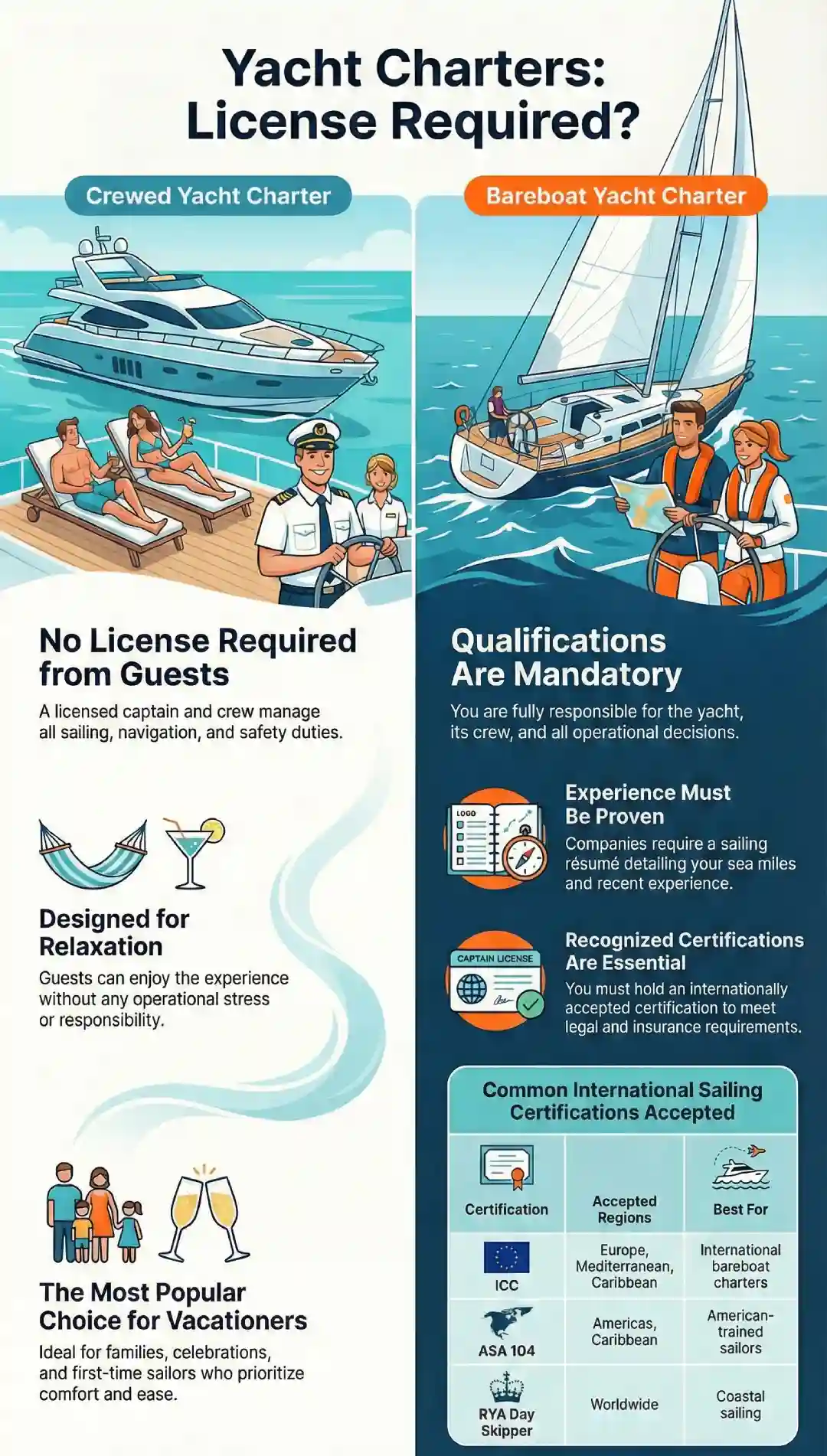
Crewed yacht charters do not require any sailing qualifications from guests. A licensed captain and professional crew operate the yacht, manage navigation, handle docking, and ensure safety throughout the trip.
Guests are free to relax, spend time with friends or family, swim, enjoy the views, or celebrate special occasions without worrying about how the yacht is run.
This option is especially popular in destinations like Puerto Vallarta, where visitors want comfort, local knowledge, and a smooth experience on the water. The crew understands weather patterns, marine regulations, and the best places to anchor safely.
For most travelers, this is the simplest and most enjoyable way to experience yachting. No training, exams, or prior experience are needed making it ideal for first-time guests, families, and anyone who wants to enjoy the day without responsibility.
Bareboat Yacht Charters (Qualifications Required)
Bareboat yacht charters place full responsibility on the person renting the yacht. No captain or crew is provided, which means you are responsible for operating the vessel, managing safety equipment, planning routes, and responding to changing sea conditions.
Because of this responsibility, charter companies require proof of experience and recognized qualifications. These requirements are not optional. They exist to protect passengers, vessels, and everyone sharing the water.
Bareboat charters are typically chosen by experienced sailors who want independence and full control. Without proper qualifications, charter companies will refuse bookings not as a formality, but as a legal and insurance requirement.
What Qualifications Are Required to Sail a Yacht Yourself?
If you plan to sail a yacht yourself, qualifications are essential. Charter companies must be confident that you can safely manage the yacht, protect everyone on board, and avoid damage.
Requirements vary by country, but expectations are similar worldwide. You must show real, relevant experience not just interest or basic lessons. Sailing independently means making decisions under pressure, handling equipment correctly, and responding to unexpected situations at sea.
For this reason, proof of competence is required before a yacht is handed over. These requirements are enforced by insurers and port authorities, not just charter companies.
Minimum Sailing Experience Required by Charter Companies
Charter companies look closely at a sailor’s experience before approving a bareboat charter. Most will ask for a sailing résumé that outlines logged sea miles, vessel types, and locations sailed.
Experience with yachts of similar size is especially important. Someone familiar only with small boats may not qualify to operate a larger cruising yacht.
Companies also assess practical skills such as anchoring, docking, handling wind conditions, and managing basic emergencies. Experience must be recent and relevant, as outdated or casual sailing history is often not enough.
Commonly Accepted Sailing Certifications
When sailing a yacht yourself, charter companies usually look for certifications that are recognized internationally. This isn’t about collecting paperwork or passing exams for the sake of it.
These certifications exist to give charter operators, insurers, and port authorities confidence that a sailor understands basic navigation rules, safety procedures, and yacht handling in real conditions.
Because maritime laws vary from country to country, internationally recognized certifications make it easier to assess competence quickly and consistently. Without them, even experienced sailors may struggle to get approval for a bareboat charter abroad.
International Sailing Certifications That Are Most Widely Accepted
ICC (International Certificate of Competence)
The International Certificate of Competence (ICC), is one of the most widely accepted sailing certifications in the world. It is especially important in Europe and the Mediterranean, where port authorities and charter companies often request it during inspections.
The ICC confirms that the holder meets basic international standards for operating a yacht safely, including navigation, seamanship, and onboard safety. For sailors planning to charter a yacht across different countries, the ICC provides clarity and consistency that local boating licenses often do not.
| Certification | Accepted Regions | Best For |
| ICC | Europe, Mediterranean, Caribbean | International bareboat charters |
| ASA 104 | Americas, Caribbean | American-trained sailors |
| RYA Day Skipper | Worldwide | Coastal sailing |
| RYA Yachtmaster | Worldwide | Advanced and offshore sailing |
ASA & RYA Certifications (American vs British Systems)
ASA and RYA certifications are two well-known systems that charter companies commonly accept around the world.
ASA certifications, such as ASA 104 Bareboat Cruising, are widely used by American sailors and are often accepted in the Caribbean and the Americas.
The RYA system, based in the United Kingdom, includes levels like Day Skipper and Yachtmaster, which reflect increasing experience and responsibility. While the structure of these systems differs, charter companies focus less on the name of the certificate and more on whether it matches real, recent experience on similar yachts. Certifications help support a sailor’s background, but they are always reviewed alongside practical sailing history.
Do You Need to Sail in Different Destinations?
Sailing requirements can also vary by destination, as sea conditions, local regulations, and maritime traffic are not the same everywhere. For travelers considering sailing a yacht themselves, this is one more reason why experience and qualifications are reviewed carefully and why many people choose a crewed charter instead.
Legal and Insurance Requirements When Sailing a Yacht

Legal and insurance requirements play an important role when someone plans to sail a yacht on their own. These rules are not meant to discourage people from yachting, but to protect passengers, vessels, and everyone sharing the water. Charter companies are required to follow national maritime laws and insurance policies, which means they must confirm that the person operating the yacht is properly qualified. When a professional crew is in charge, these requirements are handled by the charter company, allowing guests to focus entirely on enjoying the experience.
Insurance Requirements for Bareboat Charters
Insurance is one of the main reasons charter companies ask for proof of experience and qualifications on bareboat charters. Sailing incidents can be expensive, and insurers need confidence that the skipper can handle the yacht safely. Before approving coverage, insurers review factors such as vessel size, destination, certifications, and recent sailing experience. Without insurance approval, a bareboat charter cannot proceed. This process protects both the renter and the charter company and is a standard part of responsible yacht operations.
Local Maritime Laws and Port Authority Rules
Maritime laws vary by country and sometimes even by marina. Some regions require specific licenses, while others focus more on demonstrated experience. Port authorities may request documents during inspections, especially in busy or regulated waters. These rules exist to maintain safety and order at sea. Charter companies help guide renters through local requirements, but when sailing a yacht independently, responsibility ultimately rests with the skipper.
Can You Sail a Yacht Without Any Experience or Qualifications?
Sailing a yacht without experience is possible, but only if you choose the right type of charter. Bareboat charters do not allow this, as they place full responsibility on the renter. However, alternatives exist for travelers who want the freedom of being on a yacht without the pressure of operating it. Understanding these options allows people to enjoy yachting safely and comfortably, even without prior experience.
Hiring a Skipper as an Alternative to Certification
Hiring a skipper is a popular option for travelers who want flexibility without needing qualifications. A professional skipper handles navigation, safety, and local regulations, while guests enjoy the experience. This option provides peace of mind and local expertise without the commitment of training or exams. For many travelers, hiring a skipper offers the best balance between independence and comfort.
Why Most Vacationers Choose Crewed Yacht Charters
Crewed yacht charters are the most common choice for vacationers because they remove responsibility entirely. With a licensed captain and experienced crew managing all operations, guests can relax and focus on enjoying the journey. This option is ideal for families, groups, celebrations, and first-time yacht guests who value ease, safety, and local knowledge over control. A crewed charter turns yachting into a true leisure experience rather than a technical challenge.
Required Documents for a Bareboat Yacht Charter
For those planning a bareboat charter, certain documents are required before approval. Preparing these in advance helps avoid delays and ensures a smooth booking process.
- Recognized sailing certificates
- Sailing résumé or experience summary
- Passport and any required visas
- Security deposit and insurance documentation
Providing complete and accurate information builds trust with charter companies and speeds up approval.
So, What Qualifications Do You Really Need to Sail a Yacht?
The answer depends entirely on how you plan to use the yacht. Sailing a yacht yourself requires recognized certifications, proven experience, and preparation. Chartering a yacht with a professional crew requires none of these. Understanding this distinction removes much of the confusion around yacht qualifications and helps travelers choose the experience that fits their comfort level.
Why Choosing a Crewed Yacht Is the Smartest Option for Most Travelers
For most travelers, a crewed yacht offers the perfect balance of luxury, safety, and ease. Instead of worrying about licenses, navigation, or local regulations, guests can fully relax and enjoy their time on the water. With a professional captain and experienced crew handling every detail, the focus stays on comfort, scenery, and shared moments. Palmara Charters specializes in crewed yacht experiences designed for travelers who want a refined yet effortless escape. By choosing a crewed yacht, guests avoid stress, reduce risk, and enjoy a smooth, memorable experience from start to finish.