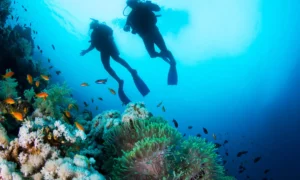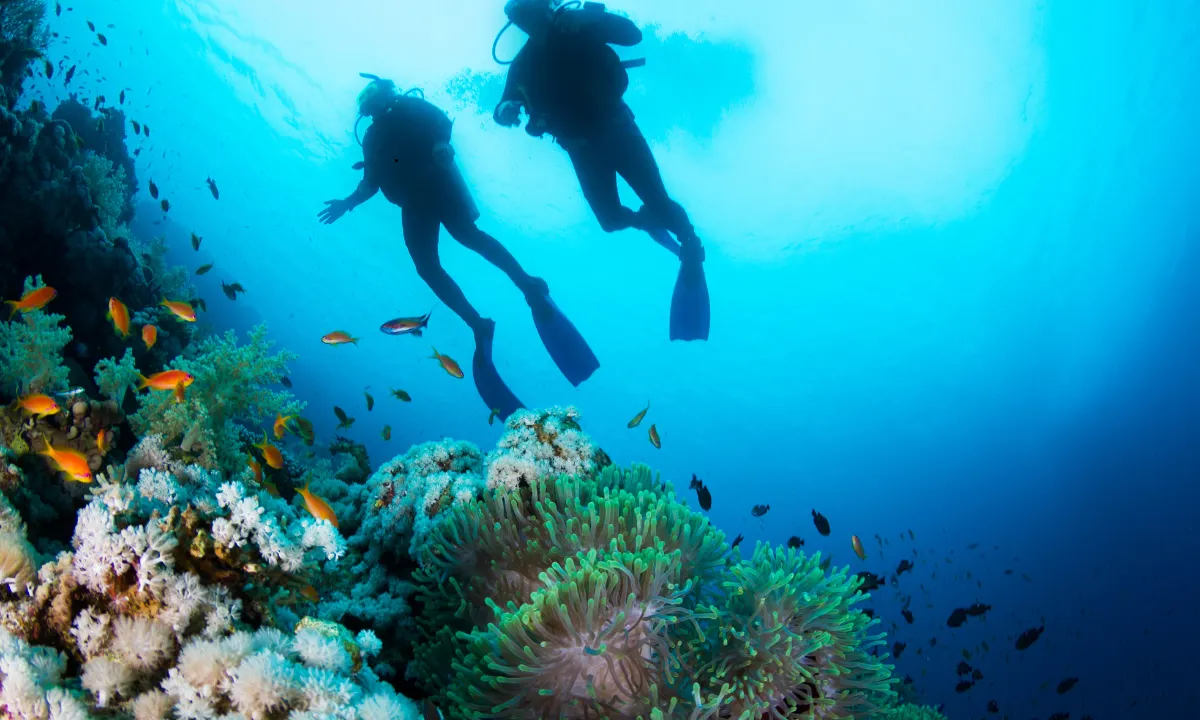
Puerto Vallarta offers Pacific-style diving, which differs significantly from Caribbean reef systems. Divers expecting year-round, crystal-clear, 30-meter visibility like Cozumel may be surprised. Banderas Bay diving is more seasonal, influenced by plankton cycles, offshore currents, and water temperature shifts. Visibility can range from 5–8 meters in cooler winter months to 20–30 meters during peak summer conditions, particularly from June through October.
The Pacific ecosystem also means larger rock formations, volcanic pinnacles, and pelagic encounters rather than extensive coral reefs. You’re more likely to see rays, turtles, moray eels, and seasonal shark species than wide coral gardens. Setting realistic expectations helps divers choose the right time and site based on certification level and comfort in variable conditions.
Where Do You Dive in Puerto Vallarta?
Most dive operations depart from Marina Vallarta or the southern marina near Los Muertos Pier. Travel times vary depending on site distance and sea conditions.
Los Arcos Marine Park
Located south of Puerto Vallarta near Mismaloya, Los Arcos is typically 30–45 minutes by boat from Marina Vallarta. It is one of the most accessible and frequently visited dive areas in Banderas Bay.
Marietas Islands
Situated northwest toward Punta Mita, the Marietas Islands require approximately 60–90 minutes of travel time depending on departure point and weather. Sea conditions can influence travel duration.
El Morro
El Morro lies offshore in deeper Pacific waters and often requires a longer ride, sometimes over an hour from Marina Vallarta. Conditions here are more exposed compared to in-bay sites.
Majahuitas
Majahuitas is located south of Los Arcos and generally takes about 45 minutes to reach. It is known for calmer conditions relative to offshore pinnacles.
Punta Mita Area
Dive spots near Punta Mita sit outside the main curve of Banderas Bay and may involve stronger currents. Travel time ranges between 60–90 minutes depending on specific reef or pinnacle location.
Boat duration matters when planning surface intervals and weather windows, especially during months with afternoon wind shifts.
Quick Comparison of Best Dive Sites in Puerto Vallarta
Below is a simplified comparison of major dive zones to help match skill level and seasonal timing.
| Dive Site | Skill Level | Depth Range | Visibility Best Months | Currents | Marine Life Highlights |
| Los Arcos | Beginner–Advanced | 8–25m | Jun–Oct | Mild–Moderate | Turtles, rays |
| Marietas | Intermediate | 10–30m | Jul–Oct | Moderate | Reef fish, caves |
| El Morro | Advanced | 18–45m | Jul–Oct | Strong | Sharks, pelagics |
| Majahuitas | Beginner | 6–18m | Jun–Sept | Mild | Reef fish |
Visibility varies annually based on water temperature and plankton density, but summer consistently provides the clearest conditions across most sites.
Los Arcos Marine Park: Best for Mixed-Level Divers
Los Arcos Marine Park features dramatic granite boulders, underwater arches, and swim-through tunnels formed by volcanic activity. Depths range from shallow 8-meter training zones to deeper 25-meter areas suitable for more experienced divers. This depth variability makes it ideal for mixed-level groups.
Because it sits inside Banderas Bay, currents are usually manageable compared to offshore pinnacles. Many beginner certification dives and refresher sessions take place here due to the predictable site layout and varied depth contours. Seasonal clarity improves during summer months, often exceeding 15–20 meters. In winter, cooler water temperatures can reduce visibility due to increased plankton activity. Marine life commonly includes turtles, eagle rays, angelfish, and schools of jacks.
El Morro & Advanced Sites: For Experienced Divers Only
El Morro consists of offshore pinnacles rising sharply from deeper Pacific waters. Depth profiles can extend beyond 30 meters, with some areas approaching 45 meters. Currents are stronger here, and conditions can shift quickly depending on swell and tide patterns. Because of these factors, most operators require Advanced Open Water certification and recent dive experience.
Visibility at El Morro improves significantly during the summer season when water temperatures rise and plankton levels decrease. This is also when pelagic sightings become more likely, including reef sharks and large rays. Winter months may bring thermoclines, layers of colder water at depth, which can reduce comfort and clarity. Divers should understand that this is a more exposed, open-water environment compared to in-bay sites.
Marietas Islands: Caves, Reefs & Seasonal Conditions
The Marietas Islands are part of a federally protected biosphere reserve. Dive access may be regulated, and certain zones require permits due to conservation policies. Conditions here can vary more than inside Banderas Bay because the islands sit closer to open Pacific waters.
The underwater landscape includes rocky reefs, cavern-like swim-through areas, and moderate depth profiles between 10 and 30 meters. Currents can be present but are typically manageable for intermediate-level divers. Marine biodiversity is one of the highlights, with reef fish, moray eels, octopus, and seasonal pelagic species.
Because of protected status and offshore exposure, calm weather windows are important. Summer months generally provide clearer water and smoother travel conditions. Divers should confirm entry permissions and seasonal marine park guidelines before planning dives in this area.
When Is Visibility Best for Scuba Diving in Puerto Vallarta?
Visibility in Puerto Vallarta follows a clear seasonal pattern. The best underwater clarity typically occurs between June and October, when warmer surface temperatures reduce nutrient upwelling and plankton concentration. During these months, visibility can range from 15 to 25 meters, especially at offshore sites like El Morro and the Marietas Islands. In contrast, winter months often see visibility drop to 5–12 meters due to increased plankton blooms and cooler water layers.
Thermoclines are common from December through March. These are temperature transition layers where divers may suddenly pass from warm surface water into noticeably cooler depths, sometimes experiencing a 3–5°C change within a few meters. Morning dives usually offer the calmest sea conditions and better clarity before afternoon winds increase surface disturbance inside Banderas Bay.
Seasonal Visibility & Temperature Overview
| Season | Visibility Range | Water Temperature | Conditions |
| Jun–Oct | 15–25m | 28–30°C | Warm water, best clarity |
| Nov–Jan | 8–15m | 24–26°C | Mixed clarity, mild thermoclines |
| Feb–May | 5–12m | 20–24°C | Cooler water, stronger thermoclines |
Understanding these seasonal shifts helps divers choose the right time based on comfort and expectations.
Seasonal Water Conditions & Thermoclines Explained
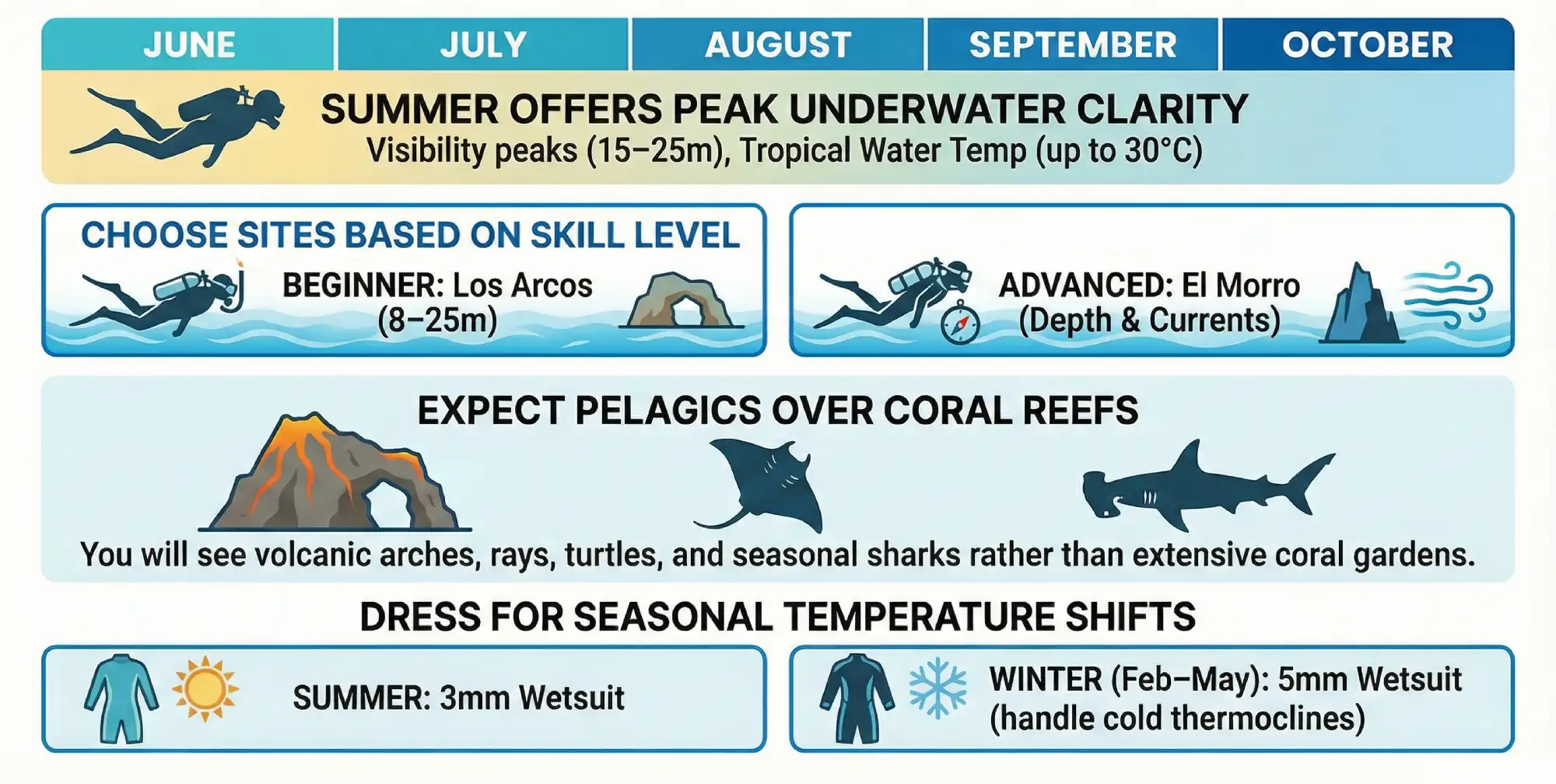
Summer diving in Puerto Vallarta typically means warm surface water between 28–30°C (82–86°F). During these months, many divers feel comfortable in a 3mm wetsuit or even lighter thermal protection depending on tolerance. Offshore sites may still feel slightly cooler at depth, but temperature changes are usually gradual.
Winter and early spring bring cooler conditions, often ranging from 20–24°C (68–75°F). Thermoclines become more pronounced, meaning divers may encounter sudden cold pockets at depth. A 5mm wetsuit is often recommended during these months for comfort, particularly on deeper dives exceeding 18 meters. Sudden temperature shifts can affect buoyancy and comfort if not anticipated. While not dangerous when managed properly, being aware of these seasonal differences improves overall dive planning and safety preparation.
Is Scuba Diving in Puerto Vallarta Safe?
Scuba diving in Puerto Vallarta is generally safe when conducted with certified operators who follow recognized international training standards. Divers should ensure their chosen operator requires proof of certification and adheres to depth limits appropriate to training level. Conditions inside Banderas Bay are usually moderate, but offshore sites may involve stronger currents and deeper profiles. Puerto Vallarta is widely considered one of the safer beach destinations in Mexico.
Weather monitoring is essential, particularly during the rainy season when afternoon storms can develop. Professional operators evaluate swell forecasts and wind conditions before departure. During whale season (typically December through March), increased marine traffic and wildlife protection guidelines require careful boat navigation. Divers should follow all briefings and maintain awareness of depth, air consumption, and buddy protocols. Choosing appropriate sites based on certification level is one of the most important safety considerations.
What Most Divers Get Wrong About Puerto Vallarta
One common misconception is expecting Caribbean-style visibility year-round. Pacific diving is influenced by seasonal plankton cycles, and clarity varies significantly depending on month. Booking winter dives without considering water temperature can also lead to discomfort if proper exposure protection is not selected.
Another mistake is selecting advanced offshore sites like El Morro without sufficient certification or recent experience. Currents and deeper profiles demand confidence in buoyancy and air management. Some divers also underestimate surface conditions, particularly afternoon chop that can affect entry and exit. Realistic expectations and seasonal awareness help avoid disappointment and ensure dives align with skill level and comfort.
Combining Scuba Diving with a Private Coastal Charter
For divers seeking more flexibility, combining scuba diving with a private coastal charter offers logistical advantages. Shared dive boats operate on fixed schedules and may limit surface interval comfort. A private departure from Marina Vallarta allows greater control over timing, reducing pressure between dives and offering more relaxed transitions.
Surface intervals can be spent comfortably along the coastline rather than anchored in busy dive zones. Snorkeling for non-diving companions or extending the day into a sunset cruise creates a balanced experience beyond a standard two-tank outing. Coordinating a customized day through Palmara Charters provides flexibility while maintaining professional dive planning. This approach is particularly useful during high season when shared dive boats operate at full capacity.
Frequently Asked Questions
Is scuba diving good in Puerto Vallarta?
Yes, particularly for divers interested in Pacific rock formations, pinnacles, and seasonal pelagic encounters. Conditions vary by season.
When is visibility best?
Visibility is generally strongest from June through October, when warmer water reduces plankton density.
What certification is required?
Beginner sites like Los Arcos are suitable for Open Water divers, while offshore sites such as El Morro typically require Advanced Open Water certification.
Are there sharks?
Yes, certain offshore sites may host reef sharks during warmer months. Sightings depend on season and water conditions.
How deep are most dives?
Typical recreational dives range between 8 and 30 meters. Advanced sites may extend deeper within recreational limits.
Final Thoughts: Who Will Enjoy Diving in Puerto Vallarta?
Puerto Vallarta appeals most to divers who appreciate Pacific ecosystems, dramatic rock structures, and seasonal wildlife activity. Advanced divers often gain the most from offshore pinnacles like El Morro, while those looking for a more relaxed pace might prefer overnight yacht escapes to reach distant sites without the rush of a day trip.
Advanced divers often gain the most from offshore pinnacles like El Morro, while beginners benefit from protected in-bay sites such as Los Arcos and Majahuitas. Aligning dive timing, certification level, and comfort expectations ensures a rewarding underwater experience in Banderas Bay.