Turtle hatching season in Mexico is one of the most meaningful natural events visitors can witness along the country’s coastlines. It refers to the period when baby sea turtles emerge from their nests and make their first journey to the ocean. This seasonal event attracts travelers who want to connect with nature while visiting Mexico’s beaches. For coastal destinations such as Puerto Vallarta, turtle hatching adds a deeper purpose to a beach vacation, offering visitors a chance to observe wildlife respectfully and learn about conservation efforts. Understanding the timing helps travelers plan trips responsibly, avoiding disruption to nests while supporting local programs. Ethical viewing is essential, as sea turtles are a protected species. Observing releases through approved programs allows visitors to enjoy this experience while helping ensure turtle populations continue to survive for future generations. This seasonal event attracts travelers who want to connect with nature while visiting Mexico’s beaches. At Palmara Charters, we believe the best way to experience the beauty of our coastlines is with a deep respect for the marine life that calls it home.
Understanding Turtle Life Cycles in Mexico’s Coastal Ecosystems
Mexico’s coastal ecosystems support several species of sea turtles, each following a similar life cycle shaped by nature and environment. The most common species found along Mexican shores include olive ridley turtles, green turtles, hawksbill turtles, loggerhead turtles, and leatherback turtles. Adult females return to sandy beaches to lay eggs, usually at night, burying them safely beneath the surface. After nesting, the eggs remain undisturbed during incubation. The incubation period typically lasts between 45 and 60 days, depending on sand temperature and environmental conditions. Once incubation is complete, hatchlings emerge together and instinctively move toward the sea. This connection between nesting and hatching explains why hatchling season always follows nesting season by several weeks, making timing predictable but still influenced by natural factors.
When Does Turtle Hatching Season Happen Across Mexico?
Turtle hatching season in Mexico varies by region due to differences in climate, sand temperature, and turtle species. While the process is similar nationwide, the timing changes depending on the coastline. Travelers should understand these regional differences to plan visits that align with hatchling activity. In general, hatching occurs several weeks after nesting, meaning peak hatchling sightings often happen later in the year. Mexico’s long coastline offers many opportunities to see turtle releases, but knowing when and where increases the chances of experiencing this event responsibly. Below is a regional breakdown to help visitors choose the best destination and travel window.
Pacific Coast & Puerto Vallarta (Banderas Bay)
Along the Pacific Coast, including Puerto Vallarta and Banderas Bay, turtle nesting usually takes place from August through December. As a result, turtle hatching season typically runs from late September to December. This region is known for olive ridley turtles, though green turtles are also present. Many local conservation camps protect nests and organize public hatchling releases during this period. The best time to visit is usually October and November, when hatchling activity is most frequent. These months offer travelers a strong chance to participate in supervised releases while enjoying warm weather and calm sea conditions common to the region during fall.
Riviera Maya & Yucatán Peninsula
The Riviera Maya and Yucatán Peninsula experience one of the longest turtle nesting seasons in Mexico. Nesting usually begins in May and continues through October, which means hatchlings are most active from July through November. This area is home to green turtles, loggerhead turtles, and hawksbill turtles. Beaches such as Akumal are well known for turtle activity and conservation programs. Visitors traveling in late summer and early fall often encounter hatchling releases organized by local groups. Because this region is popular with tourists, rules are strictly enforced to protect nests, making guided experiences the safest and most responsible way to observe turtle hatching. Because this region is popular with tourists, rules are strictly enforced. Many guests find that booking a private catamaran charter allows them to access quieter, protected bays where turtle activity is common away from the mainland crowds.
Los Cabos & Baja California Peninsula
In Los Cabos and along the Baja California Peninsula, turtle nesting generally occurs between June and December. Hatchling season follows closely, with peak activity from August through October. Olive ridley and black turtles are commonly found in this region. Conservation programs work closely with local communities to protect nests from natural and human threats. Fall months are the best time to visit for hatchling sightings, as temperatures are suitable and release events are frequent. Travelers often find these experiences well organized, with clear guidelines that help protect hatchlings while allowing visitors to observe from a respectful distance.
Oaxaca & Southern Pacific Beaches
Oaxaca and the southern Pacific coast are famous for strong turtle conservation traditions. Several turtle species nest here, and while activity can occur throughout the year, peak nesting and hatching usually happen from July through January. Olive ridley turtles are especially common in this region, with some beaches hosting mass nesting events. Hatchling releases are frequent and deeply connected to local culture and conservation education. Visitors traveling during late summer, fall, and early winter have the highest chance of seeing hatchlings. Many community-run programs welcome visitors, offering educational experiences that emphasize protection and respect for wildlife.
Why Turtle Hatching Season Timing Matters
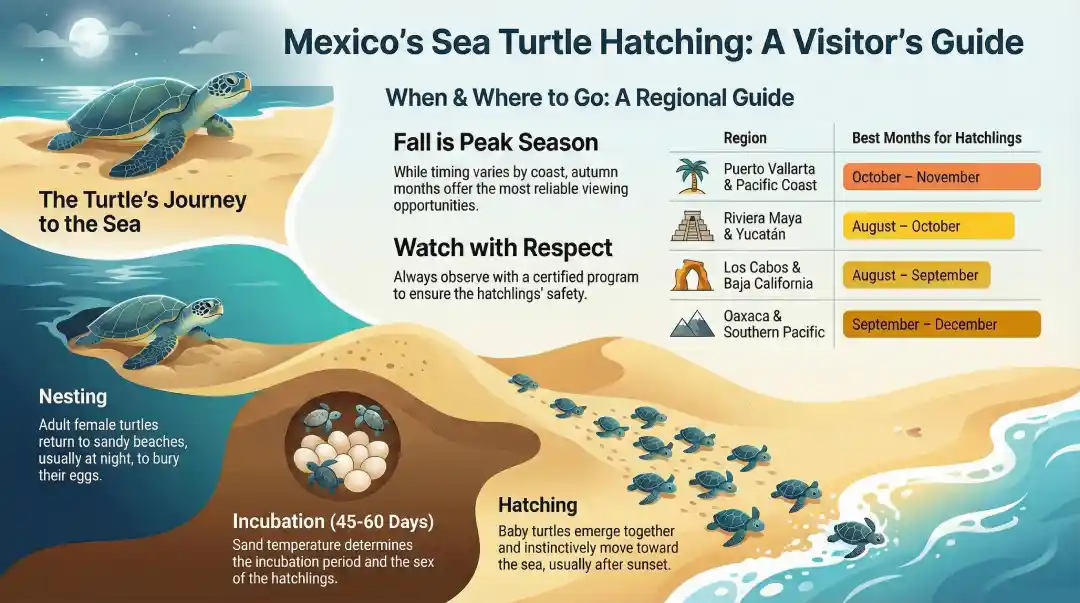
The timing of turtle hatching season matters because it is directly influenced by environmental and biological factors. Temperature plays a key role during incubation, affecting both hatch timing and hatchling development. Warmer sand speeds up incubation, while cooler conditions extend it. Temperature also influences the sex of hatchlings, making climate conditions an important factor in population balance. The incubation period of about 45 to 60 days creates a predictable window for hatching, but natural cues such as sand temperature, moisture, and even vibrations can trigger hatchlings to emerge together. Understanding this timing helps conservation groups protect nests and helps visitors plan trips that align with natural cycles without causing disruption.
Best Places to See Turtle Hatching in Mexico
Mexico offers many visitor-friendly locations where turtle hatching can be observed responsibly. These places combine active conservation efforts with public education, making them ideal for travelers who want meaningful experiences. Most releases happen in the evening or after sunset when temperatures are cooler. This timing pairs perfectly with a luxury sunset boat cruise, offering a serene end to a day of wildlife observation Each destination provides unique opportunities depending on species, season, and local programs. Participating in organized releases ensures hatchlings are protected while allowing visitors to learn about marine conservation. Below are some of the most reliable locations for turtle hatching experiences.
Puerto Vallarta & Banderas Bay Hatchling Events
Puerto Vallarta and Banderas Bay are known for well-organized turtle conservation programs. Local turtle camps protect nests along public beaches and host hatchling release events during the fall months. These events often allow visitors to observe or participate under supervision. Educational talks explain turtle behavior and the importance of protection. The combination of accessibility and strong conservation efforts makes this area a popular choice for travelers interested in turtle hatching.
Riviera Maya & Akumal Beach Releases
Akumal Beach and nearby Riviera Maya locations are internationally recognized for turtle conservation. Hatchling releases are carefully managed, with strict rules to limit crowd size and light exposure. Visitors can attend guided events that focus on education and respect for wildlife. The region’s long nesting season provides multiple opportunities to witness hatchlings while supporting conservation initiatives.
Cozumel Hatchling Experience
Cozumel offers guided hatchling experiences along its coastline, supported by local conservation groups. Hatchling sightings typically occur during late summer and fall. Programs focus on protecting nests and teaching visitors about turtle life cycles. These guided experiences ensure hatchlings reach the ocean safely while visitors gain insight into conservation efforts on the island.
Baja & Los Cabos Turtle Releases
In Baja and Los Cabos, turtle releases are commonly held during fall months. Conservation groups work with volunteers and visitors to protect nests and guide hatchlings safely to the sea. These programs emphasize education and responsible observation, making them suitable for families and travelers interested in wildlife protection while visiting the region. SEE Turtles is a globally recognized non-profit.
What You Need to Know Before Watching or Participating
Watching turtle hatchlings is a special experience, but it comes with responsibility. Sea turtles are protected in Mexico, and strict rules exist to reduce stress and increase survival rates. Hatchlings should never be touched unless a certified conservation volunteer gives direct permission. Human contact can harm them and reduce their chances of reaching the ocean. Light sensitivity is another critical factor. Artificial white light can disorient hatchlings, pulling them away from the sea, which is why red lights are recommended during releases. Keeping a safe distance is essential, as crowding can block natural paths. Conservation groups protect nests by relocating eggs when necessary, monitoring incubation, and organizing supervised releases. Following their guidance ensures visitors support protection efforts rather than unintentionally causing harm.
How to Plan Your Mexico Trip Around Turtle Hatching Season
Planning a trip around turtle hatching season requires understanding regional timing, local conditions, and travel patterns. Different coastlines peak at different times, so choosing your destination first helps narrow the best months. Travelers should look for accommodations that support or partner with conservation programs, as these often provide accurate information and ethical access to releases. Weather also matters. Summer and early fall bring higher humidity and occasional rain, while fall months often balance warm temperatures with fewer storms. Crowds increase during peak travel seasons, so booking tours and lodging early is helpful. A flexible schedule improves your chances of witnessing hatchlings, as releases depend on natural timing rather than fixed calendars.
Best Months by Region
| Region | Best Months for Hatchlings |
| Puerto Vallarta & Pacific Coast | October – November |
| Riviera Maya & Yucatán | August – October |
| Los Cabos & Baja | August – September |
| Oaxaca & Southern Pacific | September – December |
Relationship Between Turtle Hatching and Other Natural Events
Turtle hatching season often overlaps with other natural events, making it appealing for travelers interested in wildlife experiences. On the Pacific coast, turtle season aligns closely with whale watching, which typically begins in late fall and continues through winter. This allows visitors to enjoy multiple marine experiences during a single trip. Coastal regions also offer opportunities to see dolphins, rays, and seasonal bird migrations. Turtle hatching usually occurs during shoulder travel seasons, meaning fewer crowds than peak winter months. This timing gives travelers a chance to enjoy beaches and wildlife without the heavy tourism seen later in the year, making it an ideal window for nature-focused trips.
Frequently Asked Questions About Turtle Hatching in Mexico
When do turtle hatchlings head to the ocean?
Hatchlings usually emerge at night or early morning, moving toward the ocean shortly after surfacing from the nest.
Is there a best time of day to see hatchlings?
Most releases happen in the evening or after sunset, when temperatures are cooler and predators are fewer.
Can you volunteer with turtle releases?
Some conservation programs accept volunteers, but advance registration and training are usually required.
Are turtle watching tours available year-round?
Tours are seasonal and depend on nesting and hatching cycles, so availability varies by region and month.
Conclusion: Best Months and Tips to Experience Turtle Hatching in Mexico
Turtle hatching season in Mexico offers meaningful experiences for travelers who plan carefully and act responsibly. The best months vary by region, with fall being the most reliable period across much of the country. Puerto Vallarta and the Pacific coast shine in October and November, while the Riviera Maya peaks slightly earlier. Ethical engagement is key. Choosing supervised programs, respecting guidelines, and supporting conservation efforts help protect these species. With thoughtful planning and awareness, travelers can enjoy turtle hatching while contributing to long-term preservation, making their visit both memorable and responsible.